Spokane Radon Mitigation and Testing
Below 4.0 pCi/L, or we come back for free.
What we do
Radon testing and radon mitigation services for homeowners, plus the specialist work Inland Northwest homes and buildings need.
What is radon, and how do you get rid of it?
Radon mitigation, also called radon remediation, pulls the gas from under the house before it gets inside.
A gas you can't smell, from the ground under Spokane
Radon is a colorless, odorless radioactive gas that forms as uranium in soil and rock breaks down. Under much of Spokane it moves easily through loose flood gravel. The basalt under the South Hill lowers the odds but doesn't rule radon out.
Exposure peaks in winter. A heated house acts like a chimney and draws soil gas in through foundation cracks, sump pits and bare crawl space soil. Indoors, radon leaves radioactive particles in the lungs, and the health risks grow with every year of exposure.
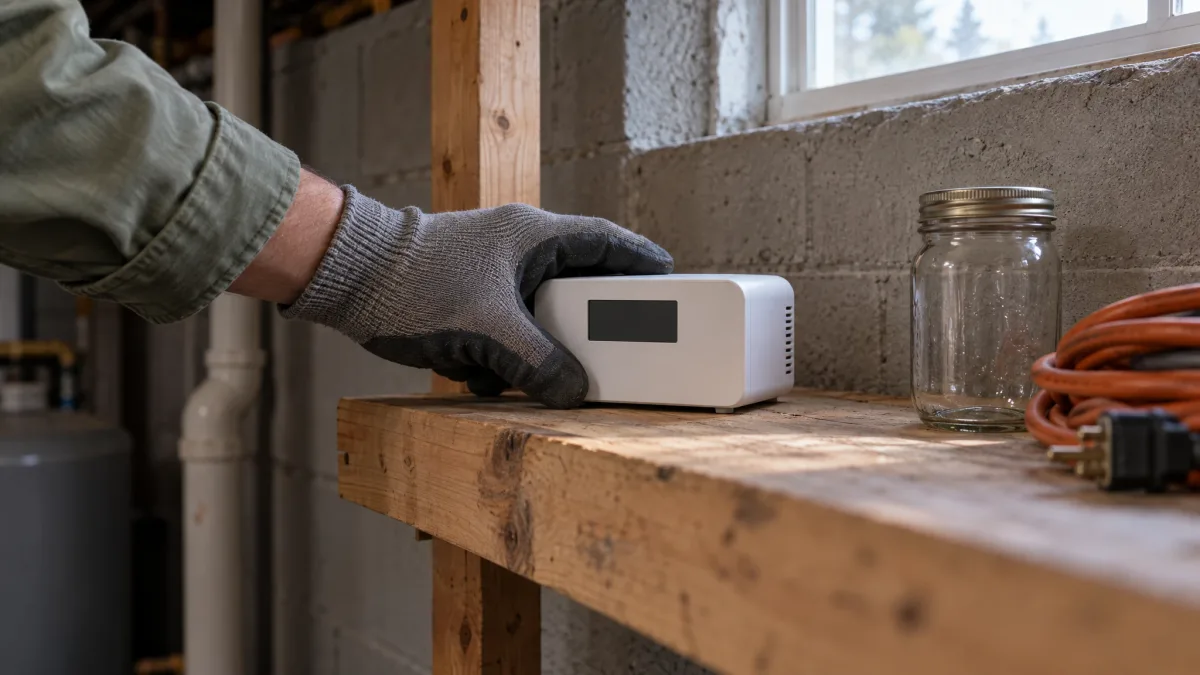
That makes a closed-house winter test the most telling. A test kit goes to a laboratory; a continuous monitor records every hour and reports the day it comes out.
How a radon mitigation system works here
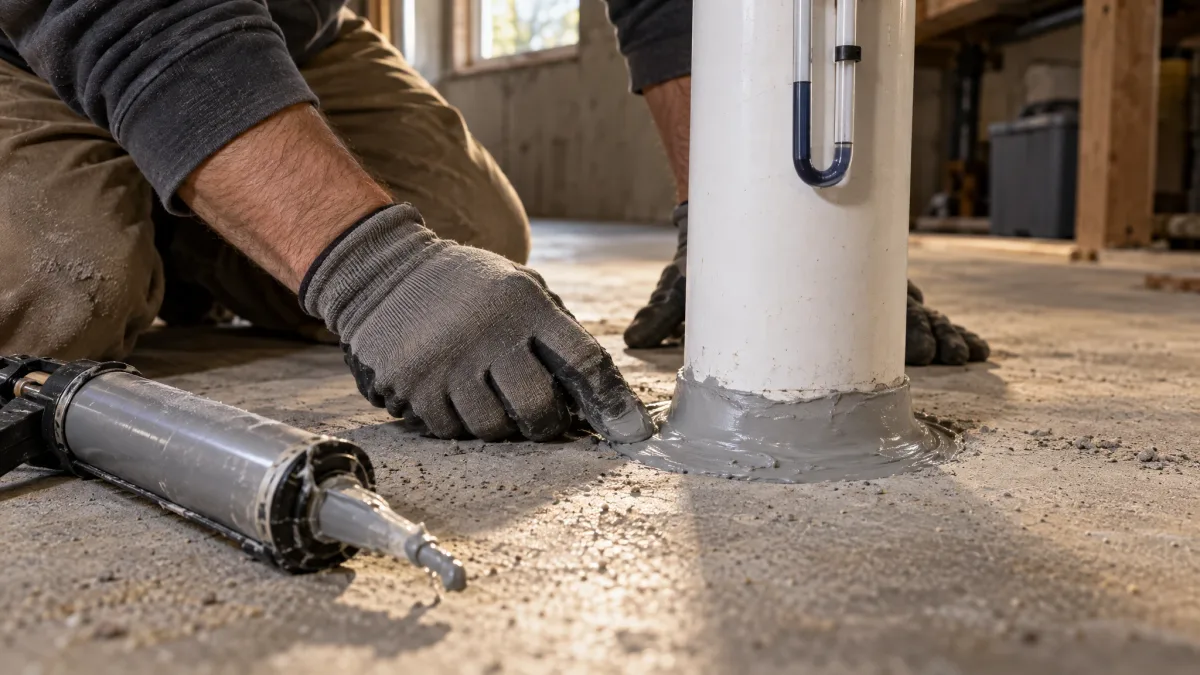
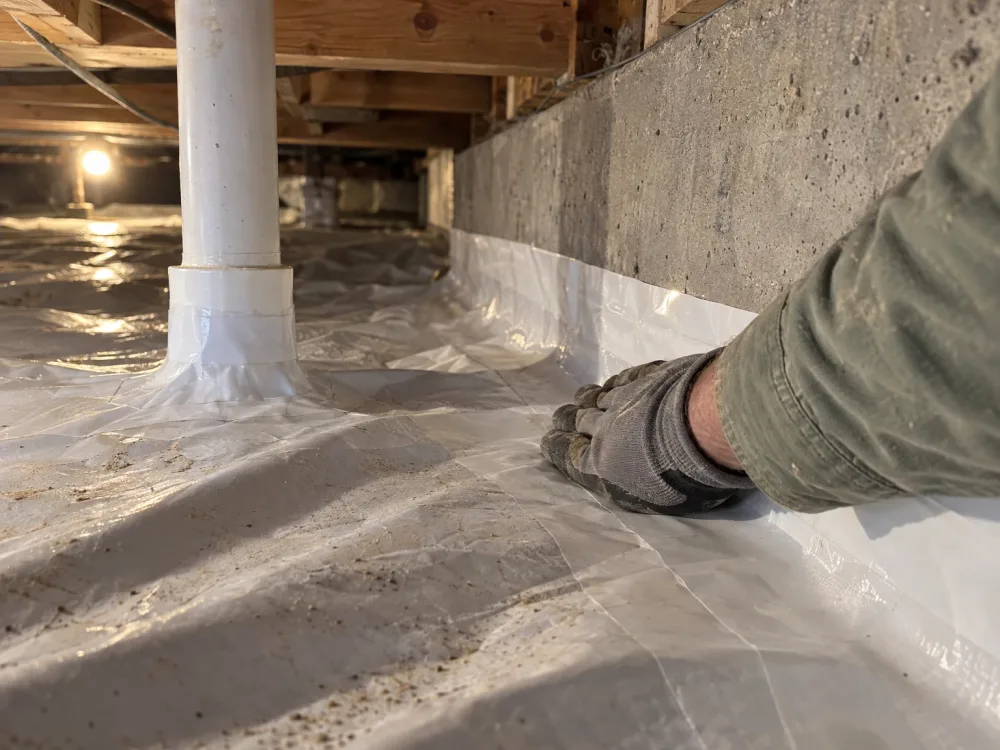
- 1Suction point. A pit under the slab, or a sealed membrane over crawl space soil. Loose gravel under many Spokane slabs lets one suction point reach far; tighter soil can need more.
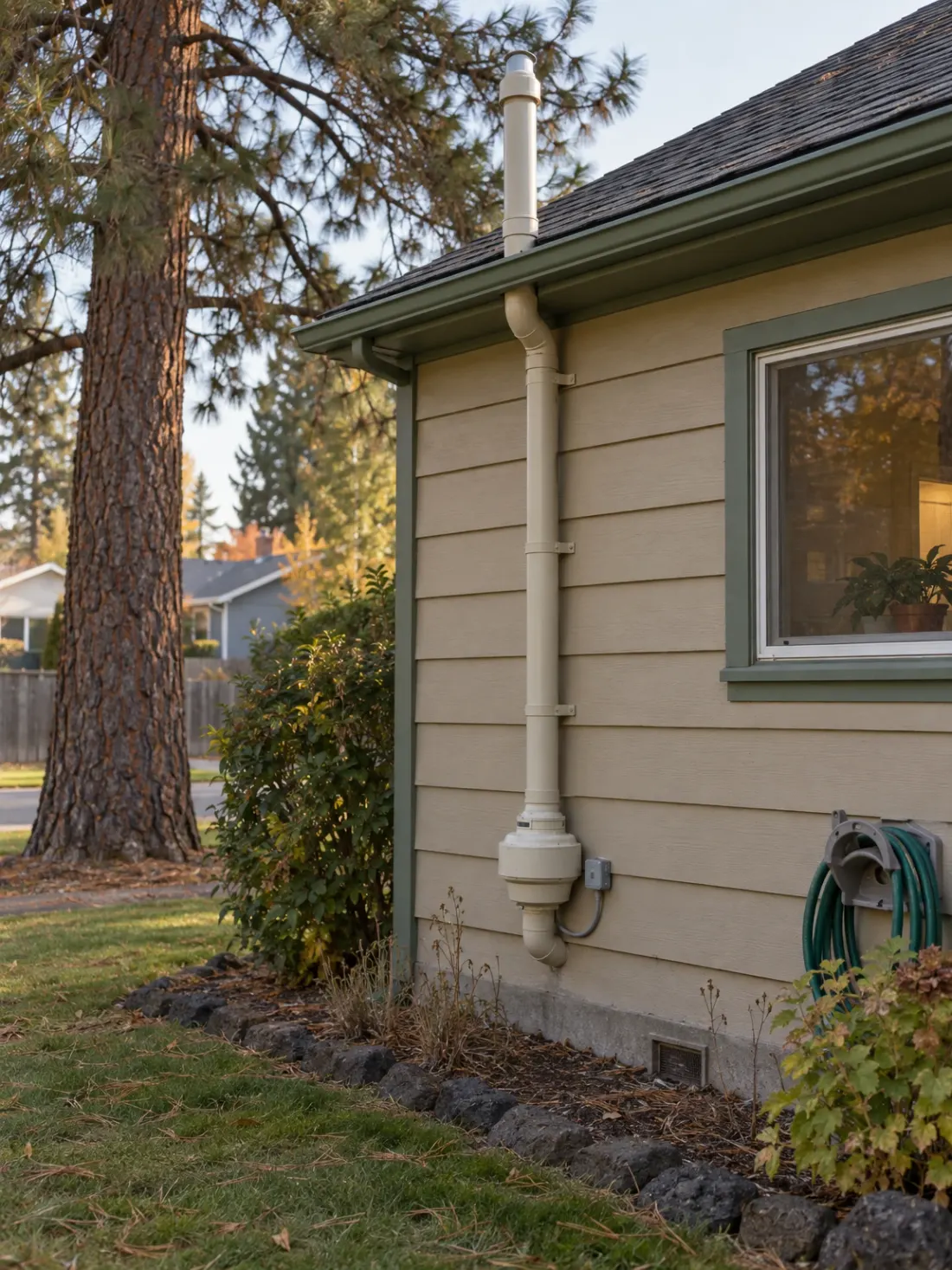
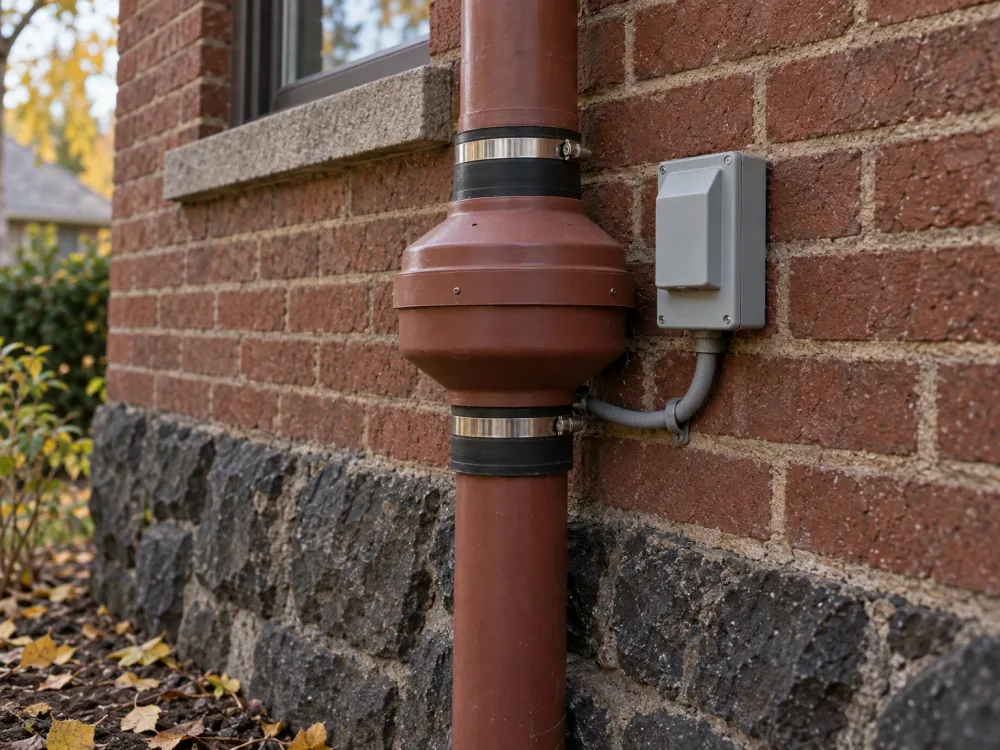
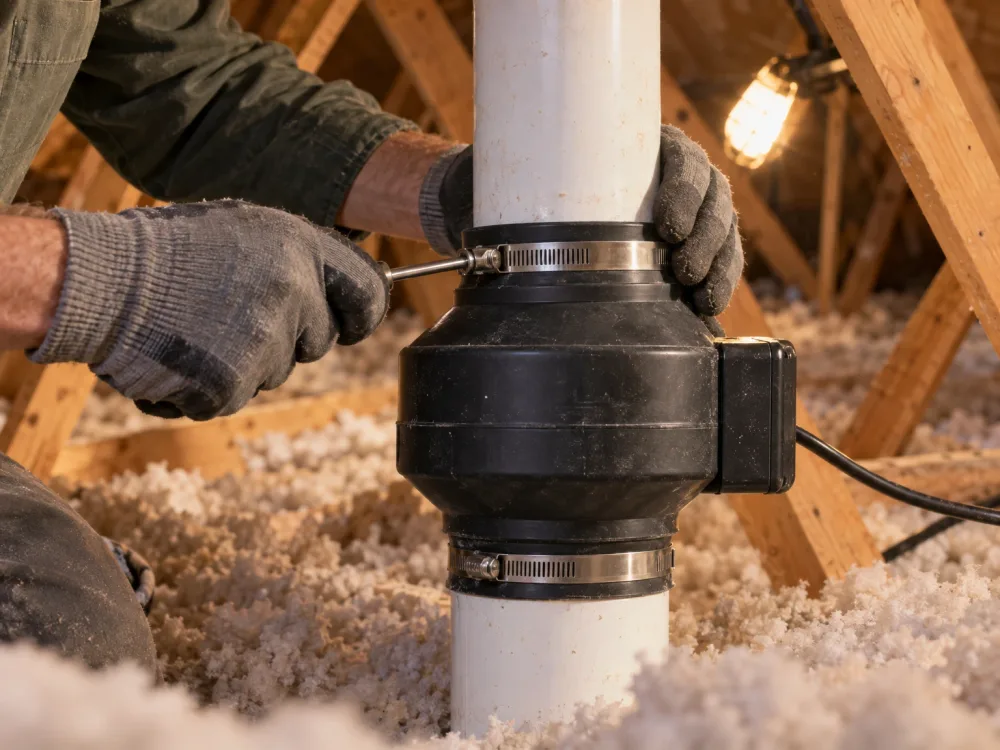
- 2Pipe and fan. Sealed PVC runs to a fan outside the living space, insulated through cold attics so condensation can't freeze in a hard winter.
- 3Lower pressure below. The fan runs around the clock and keeps the soil at lower pressure than the basement, so radon flows into the pipe instead of the house.
- 4Vent above the roof. The pipe is routed to shed snow and stay clear of frost, and a U-tube gauge shows at a glance that the system is working.
EPA rates this active soil depressurization at 50 to 99 percent radon reduction. Sealing alone or an air cleaner won't do the job. Radon mitigation in detail →
Sources
Is radon a problem in Spokane?
Yes. The granitic and metamorphic rock north of Spokane carries more uranium than most of Washington. In the Spokane Valley, coarse gravel left by the Ice Age floods lets radon gas travel easily from the soil into basements. Radon levels can still differ widely between neighbors, so every home needs its own test.
In the state’s census-tract data, tracts within ZIP codes 99216 and 99217 show 54% to 68% of tests at or above 4.0 pCi/L, and one tract in 99212 reaches 79%. Around Airway Heights it is about 10%, yet even there some homes test high.
Washington code has required radon-resistant construction in Spokane County since July 1991. That passive pipe is a minimum, and newer homes still test high. Many can be fixed by adding a fan.
EPA estimates radon causes about 21,000 lung cancer deaths in the U.S. each year, about 2,900 of them in people who never smoked. The risk grows with the radon level and the years of exposure. Radon and lung cancer →
Sources
Honest prices, up front
Our starting prices. You get a fixed written quote before any work begins.
Below 4.0 pCi/L, aiming for 2.7, or we keep working at no charge.
At Avista Washington's rate of 14.55¢ per kWh (October 2026), a 20–150 watt radon fan costs about $25–$191 a year. Most homes land near the low end. Avista has asked to raise residential bills about 14% in 2027; the state hasn't decided yet.
How we work with you
Test
We place a continuous monitor for 48 hours. Used a free Department of Health kit? Send us the result and skip ahead.
Visit & quote
We check how air moves under your slab and plan a pipe route that sheds snow and stays clear of frost. Then you get a fixed written price.
Install
Most installations take one day. We seal cracks and the sump, handle the L&I electrical permit, and clean up before we leave.
Re-test
A post-mitigation test is included, not an add-on. You keep the report for your records or your buyer.
Typical results
All typical results →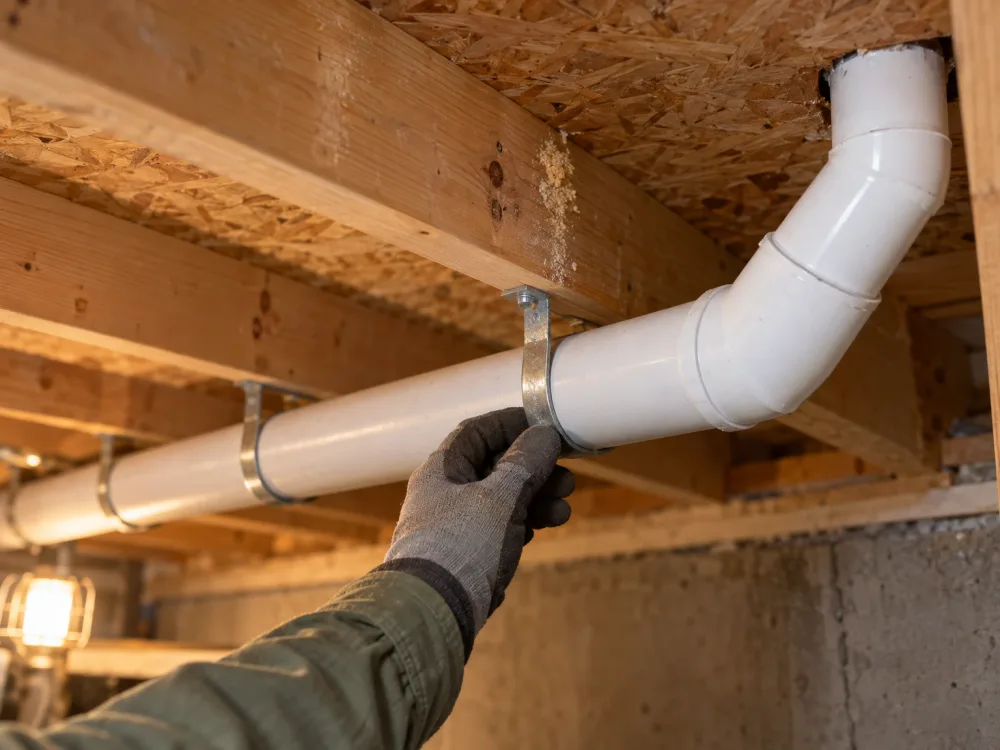
Planned around your house
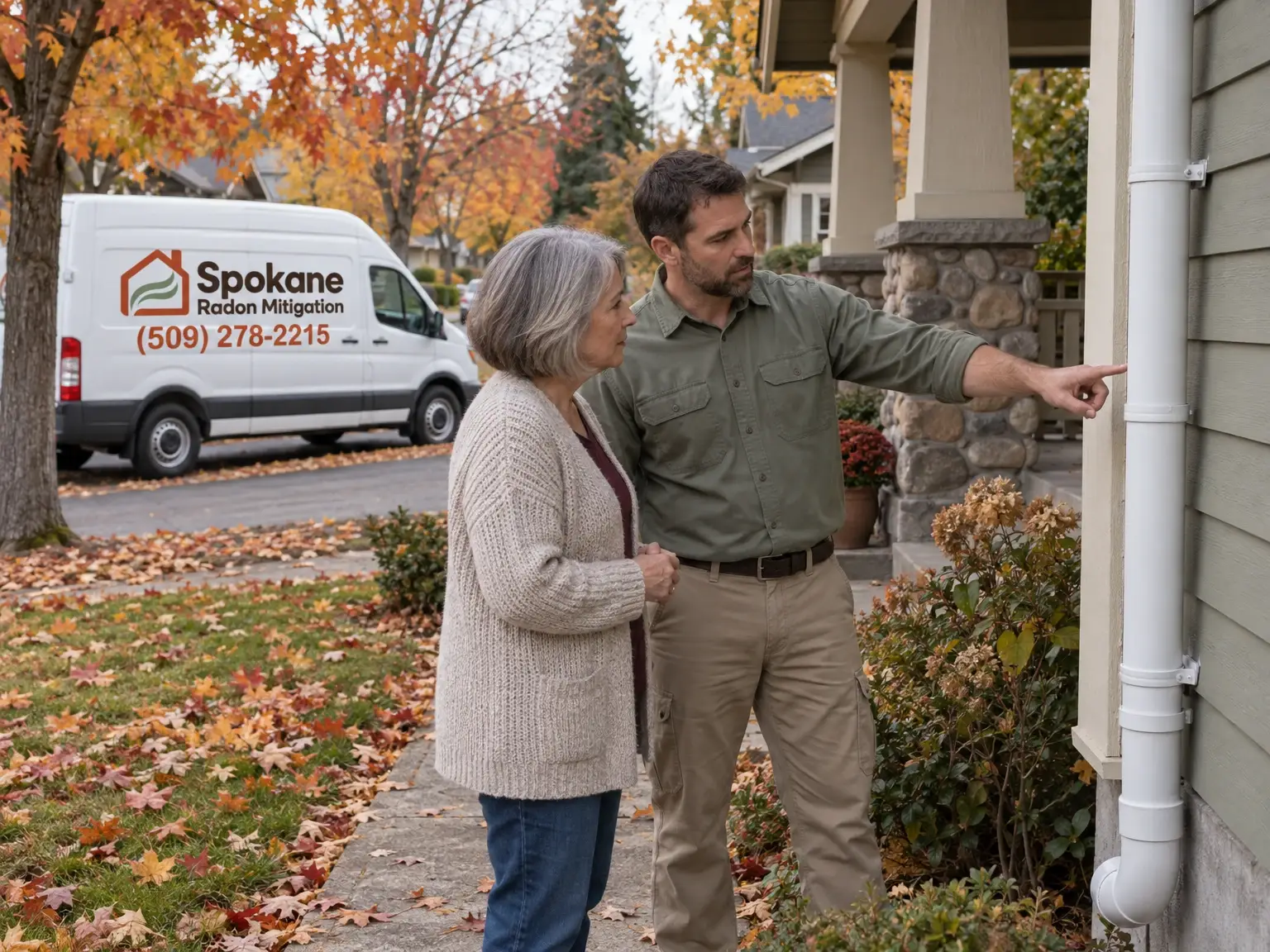
Every radon mitigation system starts with a look at your foundation: where suction works best in the soil below, how the pipe runs and where the fan sits. Our team gives you that plan and a fixed price in writing before any work starts.


Where we work
Spokane, WA and the Inland Northwest, from Eastern Washington into North Idaho, within about 40 miles of downtown. All service areas →
Loading map…
Questions families ask
What does radon mitigation cost in Spokane?
HomeAdvisor puts the Spokane Valley average at $1,097. Our basement and slab systems start at $1,295, including the post-mitigation test and electrical permit. You get a fixed price in writing before we begin.
Is there a free radon test?
The Washington State Department of Health mails a limited supply of free test kits; allow 8–10 weeks. In Idaho, the Department of Health and Welfare offers one free kit per address every two years when it has them in stock; in October 2026 it was sold out. If your kit shows a high number, send it to us for a quote.
Does Washington license radon contractors?
No. Washington has no state radon license. Choose a contractor with NRPP or NRSB certification who is registered with Washington L&I.
Do sellers have to disclose radon in Washington?
The Form 17 seller disclosure covers environmental conditions, and radon results a seller knows about should be disclosed. A new version takes effect January 1, 2027, with the radon question unchanged.
Should I test my well?
In Spokane, Stevens, Pend Oreille, Ferry and Okanogan counties, the Department of Health recommends a one-time uranium test for private wells. Uranium is separate from radon and needs a certified lab; we can refer you. Radon from well water is usually a small part of the radon indoors: EPA puts household water at about 1 to 2 percent.
Keep Spokane closings on schedule.
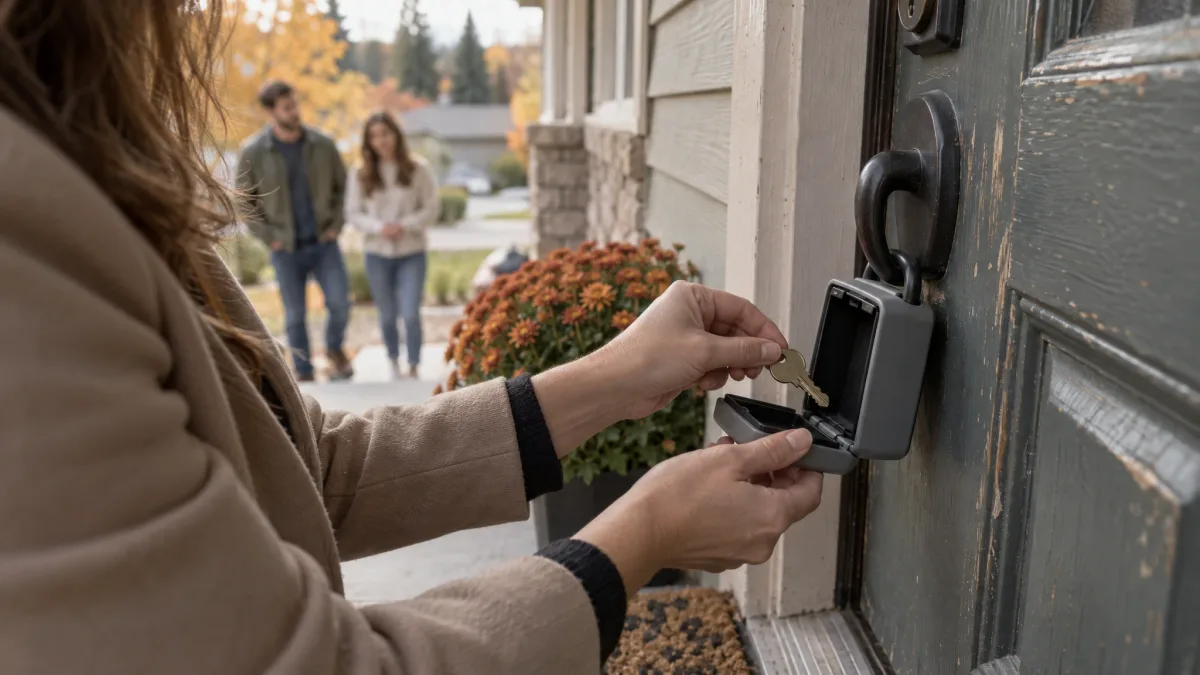
Order tests online, share lockbox details, and get the report the day the monitor comes out. Results are ready in time for Form 17 and your inspection response.
Let's find your number.
Book a 48-hour test, or send us a result for a fixed mitigation price.