
Radon Mitigation in Cheney, WA
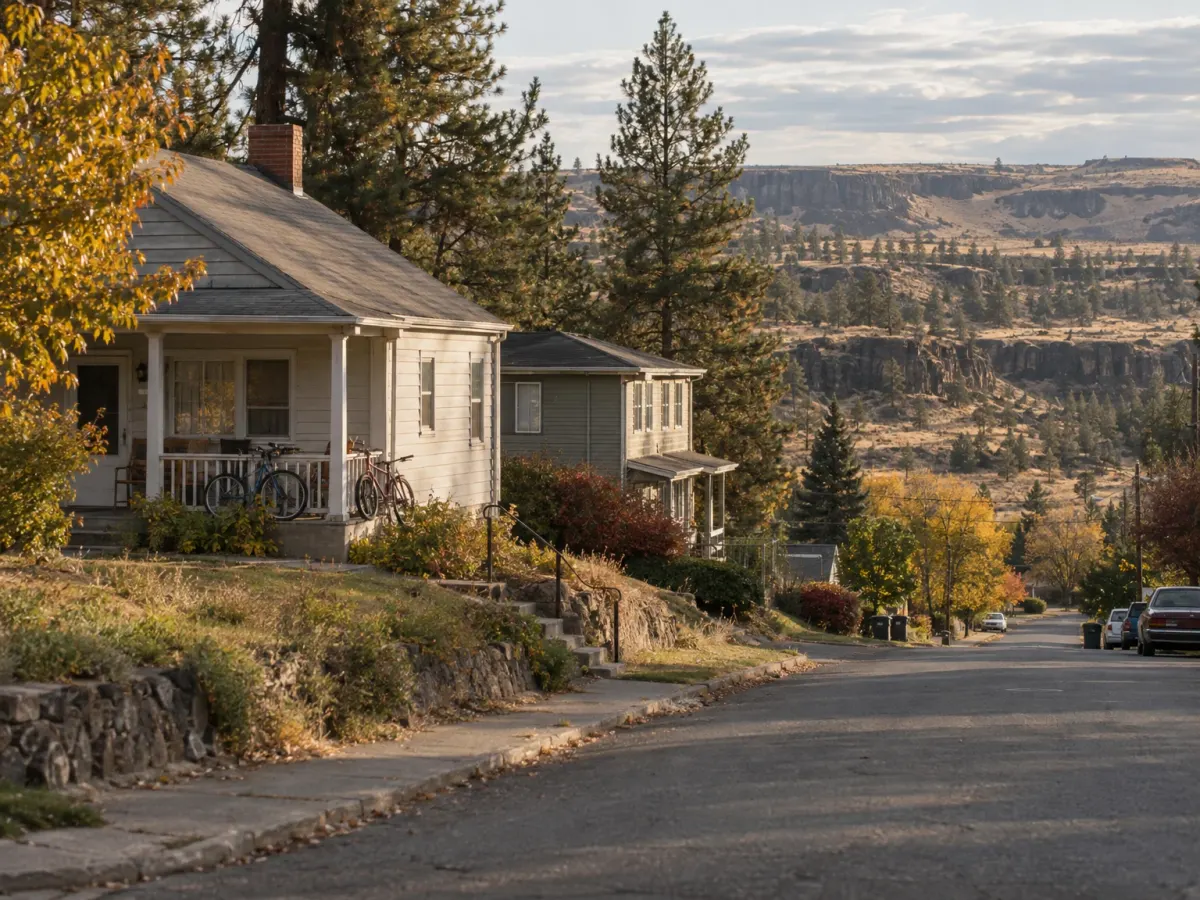
Cheney is built where two landscapes meet: deep wind-blown loess to the north and flood-scoured basalt scabland to the south, with the rail line running roughly along the divide. State test data put the town's census tracts between about one in five and nearly two in five tests at or above the EPA action level, below the county average but far from rare.
Or call (509) 278-2215
48-hour test from $195 · Systems from $1,295 · Post-mitigation test included
How it works in Cheney
- STEP 1Test
A 48-hour continuous monitor in your lowest living level, under closed-house conditions. Report the same day it comes out.
- STEP 2Look and quote
We check the foundation, run a suction test and plan the pipe route for Cheney winters. You get a fixed price in writing.
- STEP 3Install
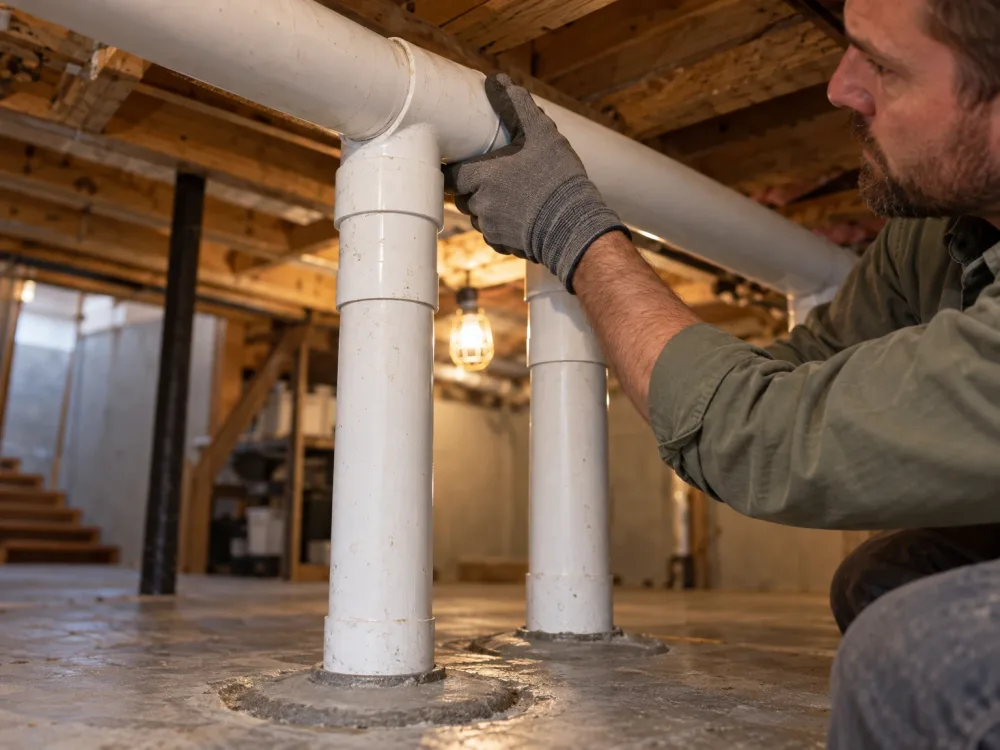
Most systems take one day: suction point, sealing, fan, manometer and the electrical permit.
- STEP 4Re-test
A post-mitigation test at least 24 hours after the fan starts shows the new number. The guarantee is below 4.0 pCi/L.
Radon mitigation cost in Cheney
Inside city limits a radon fan runs on power from the city-owned Cheney Light Department, which serves about 5,600 customers and charges a flat 7.45¢ per kWh in 2026. Homes outside town may be on Avista or Inland Power instead, depending on the address. South of the tracks, where basalt reaches the surface, a pressure-field test before the quote shows how far suction will carry.
Starting prices include the electrical permit and the post-mitigation test. Bold: systems common in Cheney homes. Estimate your system →
- Spokane County Minor Home Repair (run by SNAP) (radon not named, ask): Repairs of immediate health and safety hazards for lower-income owners outside Spokane city limits. 509-456-7627
- USDA Section 504 Home Repair (radon not named, ask): 1% loans up to $40,000, and grants up to $10,000 for owners 62 or older, for very low incomes in eligible rural areas. USDA reviewed Cheney after the 2020 census and kept it in the eligible area. Check your address. 509-381-6722
for a typical 60-watt fan running around the clock. Energy charge only, at 2026 residential rates.
A 20-watt fan costs about a third of that, a 90-watt fan half again as much.
When and how to test in Cheney
The most useful result comes from a test in the cold months, with the house closed up, on the lowest level where someone sleeps or works. For student renters the timing matters: the Washington State Department of Health mails free kits to renters as well as owners and landlords, but supply is limited and delivery takes 8 to 10 weeks, so order early in the school year.
Town water comes from eight city wells in two basalt aquifers, one about 60 feet down and one about 300. Rural homes toward Four Lakes and the scablands may rely on private wells, and the Spokane Regional Health District recommends that private well owners test for uranium and arsenic. In 2010, 13.1 percent of Spokane County residents supplied their own water.
Above 4.0 pCi/L, EPA recommends a fix; between 2 and 4, it says a fix is worth considering. Cheney's tract numbers describe neighborhoods; your basement has its own.
Permits and local rules in Cheney
Cheney isn't on L&I's list of cities that run their own electrical inspections, and the Light Department supplies power but issues no permits. The fan circuit is permitted through Washington L&I, at $78.80 per house for up to four new or altered circuits (July 2026).16
Spokane County appears on the state's list of high radon potential counties, so the residential code requires Appendix F radon control methods in new houses here. Crawl spaces in new houses must be vented, because unvented ones are barred in high-radon counties.5
Cheney's building department sets a ground snow load of 39 pounds per square foot. Roof exits and outside pipe runs are planned and braced for it.17
The state seller disclosure form (Form 17) lists radon gas among the environmental concerns it asks the seller about. A recent test result lets you answer with a measurement instead of a guess.18
About 25–30 minutes from our shop.
Cheney at a glance
Area figures describe the neighborhood, not your home. Only a test tells you your number. Sources are listed at the end of this page.
Two kinds of ground under Cheney
Cheney straddles the edge of an Ice Age flood channel. North of town rise rolling hills of deep loess, wind-blown silt that the Missoula floods never reached. To the south the floods scoured the land into channeled scablands of exposed basalt, pine groves, ponds and wetlands. The railroad roughly follows the line between the two, and most of the town has historically been built on the farmland side.
In the low ground around Meadow Lake and along Minnie Creek, the floods stripped most of the silt and left gravel instead. Just outside town, at Turnbull National Wildlife Refuge, upland soil is only centimeters thick over the basalt. The U.S. Geological Survey notes that this basalt is generally low in uranium; across the region, most of the uranium sits in the flood, lake and wind-blown sediment on top, carried in from more uranium-rich rock in northeast Washington and north Idaho.
The state's test data put Cheney below the county, but not low. In the four census tracts within ZIP 99004, between 18.8% and 38.5% of reported tests came in at or above 4.0 pCi/L, against 47.0% for Spokane County. Even the lowest tract works out to nearly one test in five. Tract figures cannot sort out individual streets, let alone houses.
of reported tests at or above 4.0 pCi/L, even in Cheney's lowest-reading census tract1
Cheney homes, from 1880s plats to student apartments
Cheney was platted in the 1880s with streets angled toward the coming railroad, and later growth followed north–south farm lot lines, which is why the town has so many triangular corners and odd-shaped lots. Fires swept the young town in 1883 and 1889. The State Normal School, today Eastern Washington University, opened in 1890, and in the 1960s and 1970s Cheney boomed as the college grew and commuters to Spokane moved in.
The Central Cheney Historic District holds simple front-gabled cottages beside two-story houses with Victorian porches. After 1950 many of these houses were remodeled into student rentals, and some were torn down for apartments. By April 2026 the state counted 5,631 housing units in town: about 63 percent in buildings with two or more units, 1,965 single-unit homes and 130 mobile homes. Only about a third of occupied homes are lived in by their owners.
Cheney's population count includes 1,468 residents of group quarters such as dorms; the housing figures on this page leave them out. Roughly two in five homes went up in 2000 or later, many of them under Spokane County's radon-resistant building rules, and construction has started south of the tracks along Cheney-Spangle Road. In an older house split into apartments, the lowest unit is the one to test.
Share of homes by year built. Source 4.
Cheney questions
How do Cheney's radon numbers compare with the county's?
They run lower on average. Cheney's census tracts range from 18.8% to 38.5% of reported tests at or above 4.0 pCi/L, against 47.0% countywide. Plenty of individual houses still test high, and a reading of your own is the only one that counts.
I rent near EWU. Can I test my unit?
Renters qualify for the state's free kits, though delivery takes 8 to 10 weeks, and a test only means setting a device in the lowest lived-in room. Share a high result with your landlord.
Who powers a radon fan in Cheney, and what does it cost?
In town it is the city's Light Department, at 7.45¢ per kWh in 2026. A 60-watt fan running all year uses about 526 kWh, roughly $39.
Where does the electrical permit for a Cheney radon system come from?
It comes from Washington L&I, because Cheney doesn't appear on L&I's list of cities that inspect their own electrical work. The $78.80 house fee for up to four circuits is part of the system price.
Does a house south of the tracks test differently from one in the north end?
It may. The north side sits on deep loess and the south side on scabland with basalt near the surface, but the state's data are too coarse to compare streets. Testing the house itself settles it.
Should I test the well at a rural Cheney property?
The Spokane Regional Health District advises private well owners to test for uranium and arsenic. That is a separate lab test from a radon test of the air.
ZIP codes: 99004
Sources for Cheney (22)
- Washington Tracking Network (WA Dept. of Health): Radon test results by census tract, all years
- Washington Tracking Network (WA Dept. of Health): Radon test results by county, 1990–2020
- Washington State Office of Financial Management: April 1 official population and housing estimates, 2026
- U.S. Census Bureau: American Community Survey 2020–2024, Cheney city (tables B25003, B25034, B26001)
- Washington Administrative Code 51-51-60101: Appendix F, radon control methods
- City of Cheney: Comprehensive Plan, Chapter 5, Natural Assets and Sustainability
- City of Cheney: Comprehensive Plan, Land Use chapter
- U.S. Fish & Wildlife Service: Turnbull National Wildlife Refuge, About Us
- U.S. Geological Survey: Geologic Radon Potential of EPA Region 10, Washington chapter (Open-File Report 93-292-J)
- HistoryLink.org: Cheney, Thumbnail History (Essay 8248)
- City of Cheney: Central Cheney Historic District
- City of Cheney: Electric rates and charges, 2026 (Resolution F-436, Exhibit A)
- City of Cheney: Light Department
- U.S. Energy Information Administration: Form EIA-861, 2024 data (utility service territories)
- Washington L&I: City electrical permits and inspections
- Washington L&I: Residential electrical fee worksheet, July 2026
- City of Cheney Building Department: FAQs for contractors and design professionals
- Revised Code of Washington 64.06.020: Seller disclosure statement
- Washington State Department of Health: Radon
- Spokane Regional Health District: Drinking water (private wells)
- U.S. Geological Survey: Estimated use of water in the United States, county-level data for 2010
- U.S. EPA: What is EPA's action level for radon?
Find your number in Cheney.
48-hour test from $195. Mitigation from $1,295 with the post-test included.