
Radon Mitigation Systems in Spokane
A radon mitigation system pulls soil gas from under your home and vents it above the roofline before it can get inside. We design each system for your foundation, route the pipe for Spokane snow and frost, and prove the result with a post-mitigation test that's included in the price.
When should you mitigate?
EPA recommends fixing any home at or above 4.0 pCi/L and suggests considering a fix between 2.0 and 4.0. Washington's Department of Health notes that other parts of the world act at 2.7 pCi/L and that the goal is as low as reasonably possible.
No action needed. Re-test every two years, and after remodeling or finishing a basement.
EPA suggests considering a fix. Confirm with a second test, ideally in winter when Spokane readings run highest.
EPA recommends fixing your home. 47% of Spokane County tests reported to the state from 1990 to 2020 fall here.
How sub-slab depressurization works
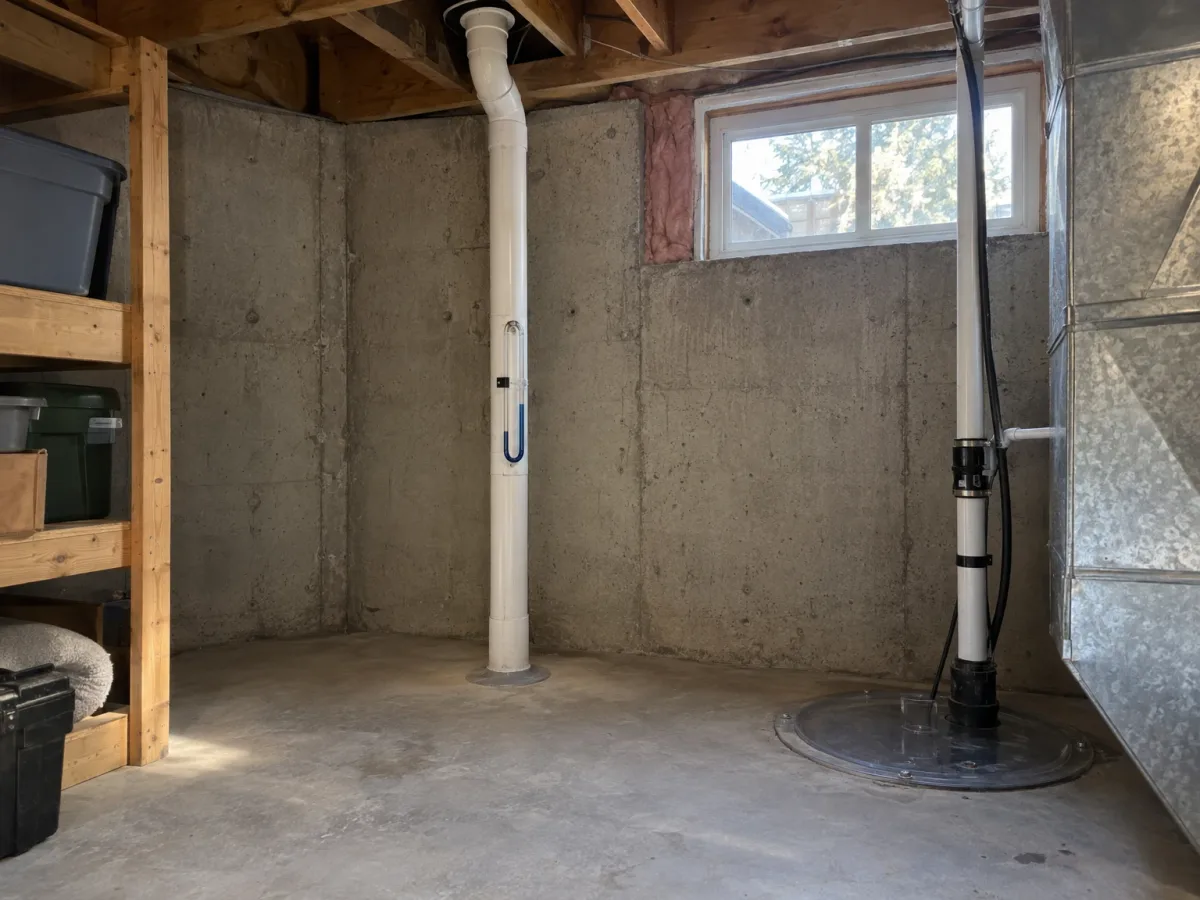
Suction point. We core through the slab and dig a small pit in the gravel below. A pressure-field test tells us how far the suction reaches.
Pipe and fan. A sealed PVC pipe runs to a fan in the attic, garage or outside wall. The fan keeps the space under your slab at lower pressure than your living space.
Sealing. We seal major cracks, the sump lid and slab penetrations so the fan pulls from the soil, not from your basement.
Verification. A manometer shows the system is running at a glance. Our post-mitigation test confirms the new level.
Systems by foundation type
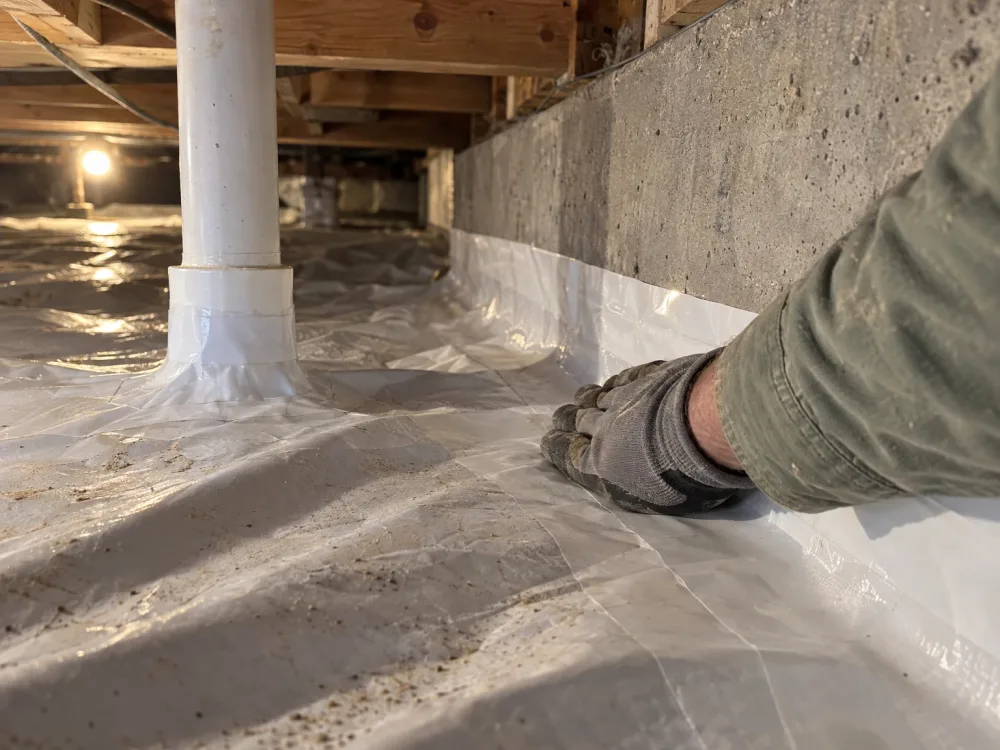
Spokane has 1910s South Hill basements, post-1991 builds with passive pipes and rural crawl spaces. Each needs a different approach.
Built for Spokane winters
A system that freezes or gets buried by roof snow stops working in exactly the months radon runs highest. We plan the route around local design conditions.
frost depth under the City/County joint policy. Exterior runs are insulated or kept inside the thermal envelope.
ground snow load in the city. We keep exhausts clear of slide paths and valleys where snow collects.
winter design temperature. Fans are rated for it and condensation is drained back into the pipe.
electrical permit and inspection for the fan circuit. We pull it and include it in your price.
The pipe runs through a closet or chase to a fan in the attic. It is nearly invisible from outside and protected from freezing. Best for finished homes where the attic is reachable.
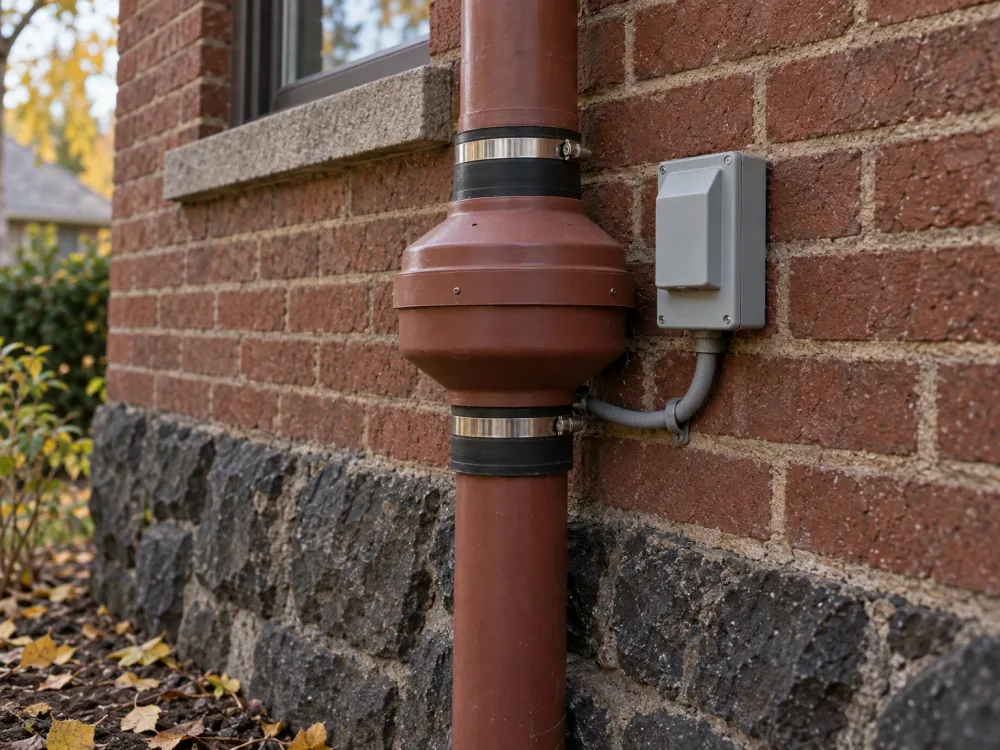
The pipe exits the rim joist and climbs the outside wall to above the eave. It is faster to install and easy to service. We paint it to match your siding on request.
What it costs to run
Mitigation standards require your installer to estimate annual operating cost. At Avista's Washington rate of 14.55¢/kWh (October 2026, riders included):
Below 4.0 pCi/L, aiming for 2.7, or we keep working at no charge.
Some Spokane installers leave post-mitigation testing to you. We include it in every install, so the guarantee is measured, not assumed.
Typical results
All typical results →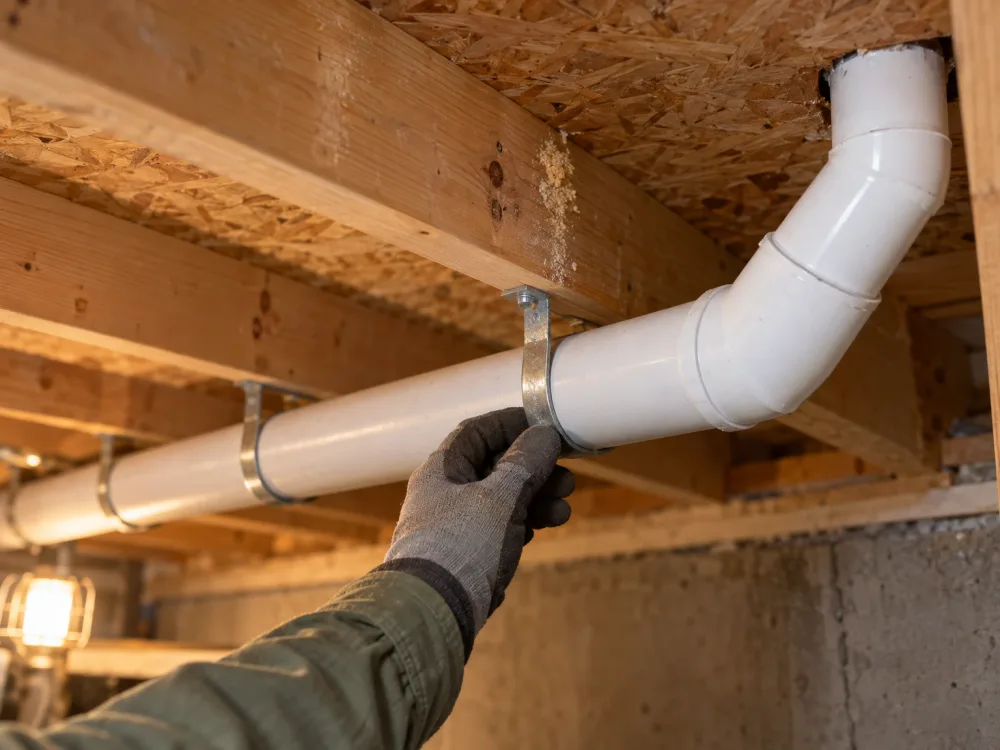
Mitigation questions
How long does installation take?
Most single-slab homes are finished in one day. Split-levels and crawl spaces can take a second day. The post-mitigation test starts at least 24 hours after the fan is switched on.
Will I hear the fan?
Fans mounted in the attic or outside are usually inaudible inside. You may hear a quiet hum near the fan itself. We never mount fans inside living space or basements.
Do I need a permit?
The fan circuit needs a Washington L&I electrical permit and inspection. We pull it and include it in your quote. Some cities run their own electrical inspections; we handle either.
Does homeowner's insurance pay for mitigation?
Usually not, and we found no utility, Washington or Idaho radon rebate. Repair programs for limited incomes are listed on our cost page.
You installed someone else's system. Can you fix it?
Yes. We service, re-test and upgrade systems from any installer. See fan replacement and repair.
Get a fixed price in writing.
Send your test result and address. We'll reply with a quote, usually the same day.