
Radon Mitigation in Deer Park, WA
Deer Park has grown faster since 2020 than any other city in Spokane County, about 27 percent by the state's 2026 estimate. The town sits on fine sediment left by an Ice Age lake, tighter ground than the outwash gravel under Spokane. Even so, the three census tracts within ZIP 99006 report 42% to 57% of radon tests at 4.0 pCi/L or more.
Or call (509) 278-2215
48-hour test from $195 · Systems from $1,295 · Post-mitigation test included
How it works in Deer Park
- STEP 1Test
A 48-hour continuous monitor in your lowest living level, under closed-house conditions. Report the same day it comes out.
- STEP 2Look and quote
We check the foundation, run a suction test and plan the pipe route for Deer Park winters. You get a fixed price in writing.
- STEP 3Install
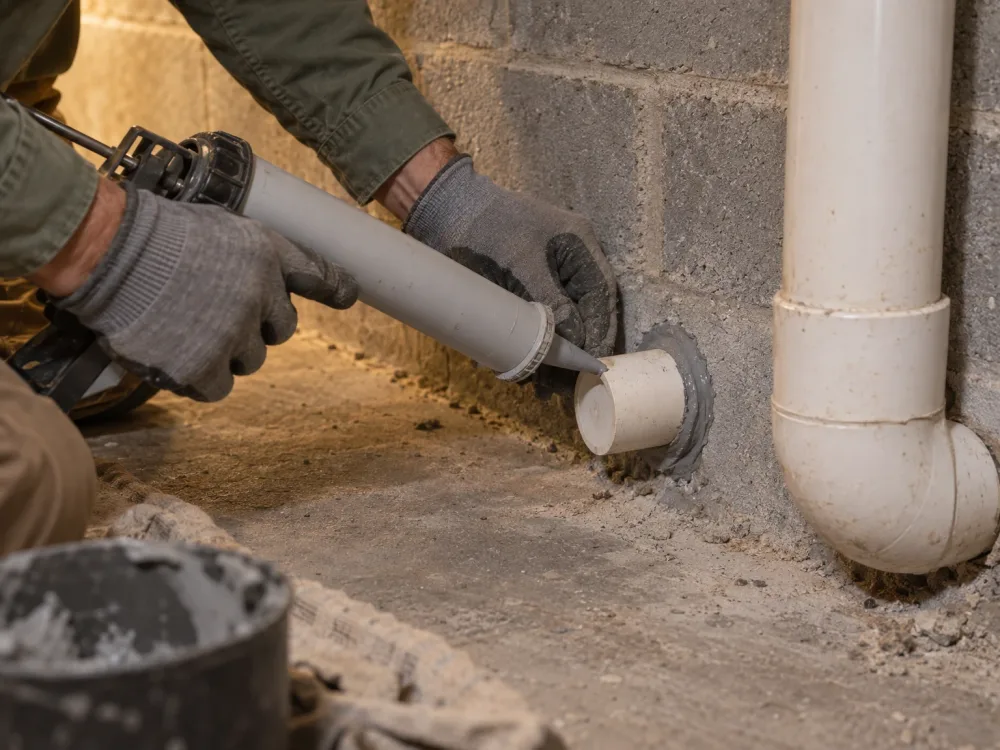
Most systems take one day: suction point, sealing, fan, manometer and the electrical permit.
- STEP 4Re-test
A post-mitigation test at least 24 hours after the fan starts shows the new number. The guarantee is below 4.0 pCi/L.
Radon mitigation cost in Deer Park
Avista supplies most of Deer Park; the city notes that Inland Power & Light serves a few homes, for electricity only. Your bill shows which applies. Where sandy or silty soil limits suction, a system may need a second suction point or a stronger fan, and the pressure-field test before the quote settles that.
Starting prices include the electrical permit and the post-mitigation test. Bold: systems common in Deer Park homes. Estimate your system →
- Spokane County Minor Home Repair (run by SNAP) (radon not named, ask): Repairs of immediate health and safety hazards for lower-income owners outside Spokane city limits. 509-456-7627
- USDA Section 504 Home Repair (radon not named, ask): 1% loans up to $40,000, and grants up to $10,000 for owners 62 or older, for very low incomes in eligible rural areas. On USDA's map, Deer Park lies inside the eligible area. Check your address. 509-381-6722
for a typical 60-watt fan running around the clock, depending on which utility serves your address. Energy charge only, at 2026 residential rates.
A 20-watt fan costs about a third of that, a 90-watt fan half again as much.
Testing a Deer Park home and its water
Pick the lowest floor where someone spends time, wait for cold weather if you can, and keep doors and windows shut. Across the three tracts within ZIP 99006 the share of tests at 4.0 pCi/L or above runs from 42.1% to 57.3%, a spread that shows how much homes vary even in a small area. Your own reading is the only one that counts for your house.
Inside city limits, the City of Deer Park supplies water and sewer to most homes, drawing on eight city wells. Beyond the city system, basalt feeds numerous domestic wells from Half Moon Prairie northward, and countywide 13.1% of residents relied on their own supply in 2010. Owners of those wells get one standing piece of advice from the Spokane Regional Health District: have the water tested for uranium and arsenic.
If you can wait two months or more, the state Department of Health may send a free kit; supplies are limited and delivery takes 8 to 10 weeks. At 4.0 pCi/L and up the EPA says to fix the house; from 2 to 4 it says a fix is worth considering.
Permits and local rules in Deer Park
Deer Park is not on L&I's list of cities with their own electrical program, so Washington L&I permits the fan circuit. The residential fee is $78.80 for up to four circuits, with $8.20 for each extra one, as of July 2026.13
The City of Deer Park's Building & Planning office covers homes inside city limits. Homes outside town fall under the county they sit in, but the electrical permit comes from L&I in both cases.14
Spokane County appears in the state code's table of high radon potential (Zone 1) counties, so Deer Park's new subdivisions must be built with Appendix F radon-resistant methods.15
The environmental section of Washington's seller disclosure statement asks about radon gas. The answer rests on the seller's actual knowledge, and a test result is the plainest way to give one.16
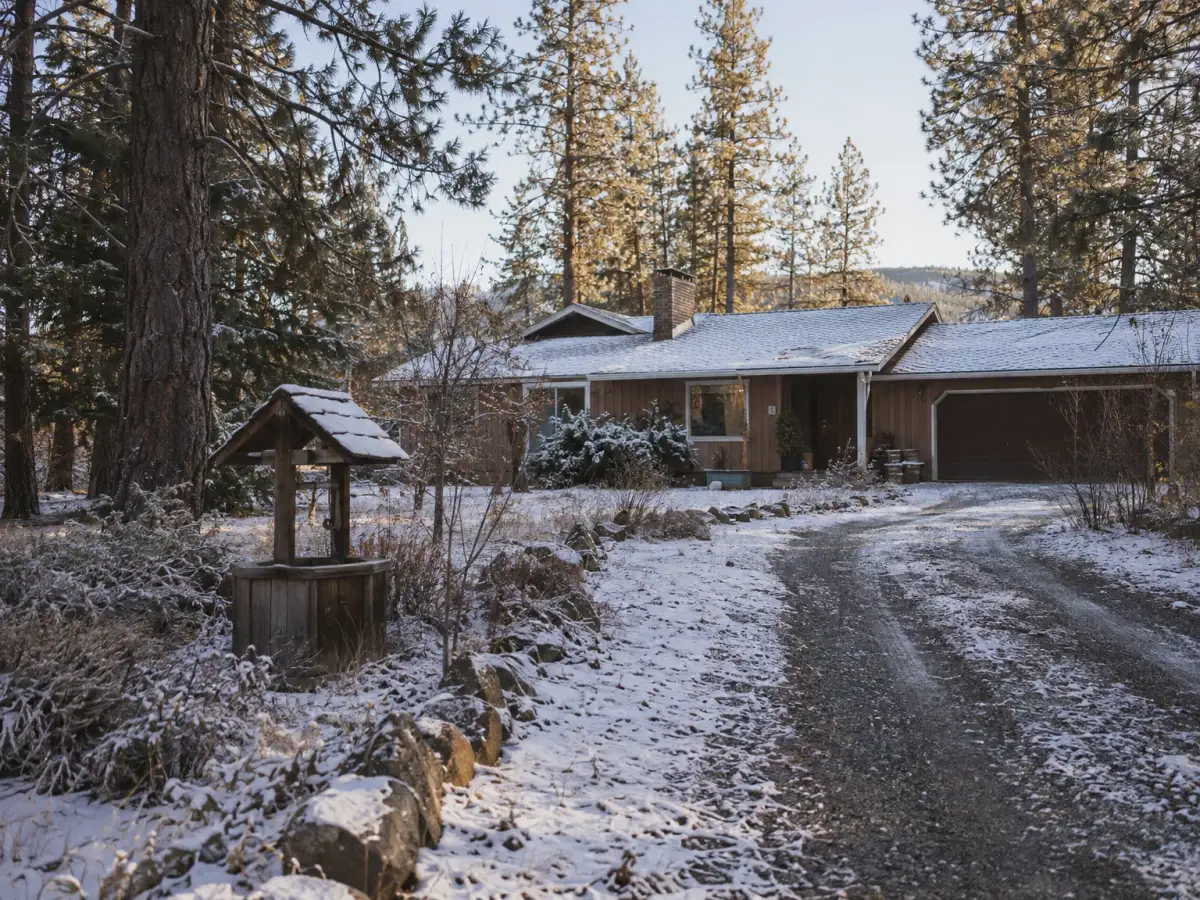
About 30 minutes from our shop.
Deer Park at a glance
Area figures describe the neighborhood, not your home. Only a test tells you your number. Sources are listed at the end of this page.
Lake sediment, sand and basalt under Deer Park
During the last ice age, Glacial Lake Columbia rose to about 2,350 feet and flooded most of the Little Spokane River basin, Deer Park included; the town now sits near 2,123 feet. Long-lived lakes like it laid down thick, mostly fine sediment on the low ground. Floodwater from Glacial Lake Missoula also poured in, routed south through gaps near Newport such as Scotia and Camden and emptied into the Deer Park area and the Little Spokane.
The result is tighter ground than in Spokane's main outwash channels. The shallow aquifer under town is mostly sand; only along the Little Spokane does it turn to sand, gravel and cobbles. Below the glacial layers lie roughly 100 feet of Latah Formation clay and silt and then Grande Ronde basalt, which feeds many domestic wells from Half Moon Prairie to several miles north of town.
Finer ground has not meant low readings. The three census tracts within ZIP 99006 show 42.1% to 57.3% of reported tests at or above 4.0 pCi/L, and a 1993 USGS assessment counted the alluvial valleys north and northwest of Spokane among places where homes should average above 4 pCi/L. Sand and silt can also limit how far a fan's suction spreads under a slab, which a pressure-field test measures before a system is designed.
high-water mark of Glacial Lake Columbia, which drowned the Deer Park area and left fine lake sediment2
Mill-town houses and new subdivisions in Deer Park
Deer Park grew up around the Spokane Falls & Northern Railway, which arrived in 1889, and around its sawmills. Deer Park Lumber ran until the late 1950s before merging with Potlatch Forests, and the last Potlatch mill in town closed in 1972. Census estimates for a town this size carry wide margins, but roughly one home in five predates 1950, built long before any radon rule.
Growth since 2020 has changed the mix. The 2020 census counted 1,901 housing units, and the state estimates 2,489 in April 2026; single-unit homes rose from 1,319 to 1,737. Roughly a quarter of the town's homes date from 2010 or later and went up under Washington's radon-resistant construction rules, which ready a house for a fan but don't guarantee a low reading.
The Census figures cover city limits only, and the rural homes that share the Deer Park mailing address, out toward Wild Rose and Half Moon prairies, are not in them. The city also has some mobile homes, and each foundation, from an old basement to a crawl space under a manufactured home, needs its own kind of system.
Share of homes by year built. Source 5.
Deer Park questions
Is radon lower in Deer Park because the ground is finer?
Not according to the data. Sand and lake sediment haven't kept any tract within ZIP 99006 below 42% of tests at the action level, and one tract reaches 57%. Only a test in your own house tells you where it stands.
We're on city water. Do we need a well test?
The city supplies most homes inside its limits. If your house has its own well, have the water checked for uranium and arsenic, as the health district advises; indoor air needs a separate radon test either way.
Who supplies power for the fan?
Mostly Avista, though the city says a few homes get electricity from Inland Power & Light. Running nonstop, a 60-watt fan adds roughly $76 to a yearly Avista bill, or $47 at Inland's rate.
Who issues the fan permit in Deer Park?
Washington L&I, not the city, and the starting price already includes that permit.
Our house is new. Should we still test?
Yes. New homes in Spokane County must include radon-resistant features, which make adding a fan easier, but they don't tell you whether a fan is needed. A test does.
ZIP codes: 99006 · 99110 · 99148
Sources for Deer Park (21)
- Washington State Office of Financial Management: April 1, 2026 population of cities, towns and counties
- U.S. Geological Survey: Hydrogeology of the Little Spokane River Basin (SIR 2013-5124)
- Washington Tracking Network (WA Dept. of Health): Radon test results by census tract, all years
- Washington State Office of Financial Management: Postcensal estimates of housing units, April 1, 2020 to April 1, 2026
- U.S. Census Bureau: American Community Survey 2020–2024, Deer Park city (tables B25034, B25024)
- City of Deer Park: Comprehensive Plan Update (2026 draft)
- U.S. Geological Survey: Geologic Radon Potential of EPA Region 10, Washington chapter (Open-File Report 93-292-J)
- HistoryLink.org: Deer Park, Thumbnail History (Essay 11193)
- Washington Administrative Code 51-51-60103: Appendix F requirements
- City of Deer Park: Utilities
- Avista Utilities: Calculating your residential electric bill, Washington (effective October 1, 2026)
- Inland Power & Light: Residential rates (effective April 1, 2026)
- Washington L&I: Residential electrical fee worksheet, July 2026
- City of Deer Park: Building & Planning
- Washington Administrative Code 51-51-60101: Appendix F, radon control methods (Table AF101(1))
- Revised Code of Washington 64.06.020: Seller disclosure statement
- Washington L&I: City electrical permits and inspections
- U.S. Geological Survey: Estimated use of water in the United States, county-level data for 2010
- Spokane Regional Health District: Drinking water (private wells)
- Washington State Department of Health: Radon
- U.S. EPA: What is EPA's action level for radon?
Find your number in Deer Park.
48-hour test from $195. Mitigation from $1,295 with the post-test included.