
Radon Mitigation in Spokane Valley, WA
Under most of Spokane Valley lies open flood gravel hundreds of feet deep, the same gravel that holds the aquifer. It moves soil gas as easily as water, and the state's test data show it: in most Valley neighborhoods, half or more of reported radon tests come back at or above the EPA action level.
Or call (509) 278-2215
48-hour test from $195 · Systems from $1,295 · Post-mitigation test included
How it works in Spokane Valley
- STEP 1Test
A 48-hour continuous monitor in your lowest living level, under closed-house conditions. Report the same day it comes out.
- STEP 2Look and quote
We check the foundation, run a suction test and plan the pipe route for Spokane Valley winters. You get a fixed price in writing.
- STEP 3Install
Most systems take one day: suction point, sealing, fan, manometer and the electrical permit.
- STEP 4Re-test
A post-mitigation test at least 24 hours after the fan starts shows the new number. The guarantee is below 4.0 pCi/L.
Radon mitigation cost in Spokane Valley
The Valley's open gravel usually works in your favor: suction spreads far under a slab, so a single suction point often covers a whole floor. Split-levels and additions on a separate slab may need a point of their own. Which utility powers the fan depends on your parcel; the city names four.
Starting prices include the electrical permit and the post-mitigation test. Bold: systems common in Spokane Valley homes. Estimate your system →
- Spokane County Minor Home Repair (run by SNAP) (radon not named, ask): Repairs of immediate health and safety hazards for lower-income owners outside Spokane city limits. 509-456-7627
for a typical 60-watt fan running around the clock, depending on which utility serves your address. Energy charge only, at 2026 residential rates.
A 20-watt fan costs about a third of that, a 90-watt fan half again as much.
Testing a Spokane Valley home
Test in the heating season if you can, with windows and doors closed, in the lowest room you use. Valley results swing from tract to tract, from about a third of tests at 4.0 or above to nearly four in five, so a neighbor's number tells you little about yours.
The Washington State Department of Health mails a limited supply of free test kits; allow 8 to 10 weeks. If you need a number sooner, for a sale or before you finish a basement, a 48-hour continuous monitor gives an hour-by-hour curve and a report the day it comes out.
The EPA recommends fixing a home at 4.0 pCi/L or more and considering a fix between 2 and 4.
Permits and local rules in Spokane Valley
Spokane Valley has no electrical inspection program of its own, so the permit for the fan circuit comes from Washington L&I. For a house, the fee is $78.80 for up to four new or altered circuits (July 2026).13
Spokane County is one of seven Washington counties where the state residential code requires radon-resistant construction (Appendix F). Unvented crawl spaces are not allowed here.9
Washington's seller disclosure statement (Form 17) asks whether radon gas is a concern on the property. A recent test answers that question with a number.10
Electricity comes from Modern Electric, Vera Water & Power, Inland Power or Avista, depending on the parcel. The city's map viewer shows which one serves yours.14
About 15 minutes from our shop. Same-week tests.
Spokane Valley at a glance
Area figures describe the neighborhood, not your home. Only a test tells you your number. Sources are listed at the end of this page.
Why radon runs high in Spokane Valley
The Valley floor is a channel two to three miles wide that Ice Age floods filled with gravel, in the center more than 600 feet deep. In the main flood channel the deposits come in layers of cobbles and boulders with little silt or clay between them. That is why the Valley has almost no surface streams: water sinks straight in. Soil gas moves through the same open spaces.
U.S. Geological Survey well logs find fine-grained layers only along the valley edges and near the outlets of Liberty, Newman and Hauser lakes. Under most of the city there is nothing to slow radon on its way to a basement floor, and the water table lies up to about 200 feet down, so a deep column of dry gravel sits under every house.
The hills along the south and east edges are different ground: old schist and gneiss with small granite bodies, flanked by Latah Formation clay that was once mined south of Opportunity and Veradale. Homes on those slopes can test differently from homes on the flat.
of Ice Age flood gravel under the central Spokane Valley, open enough that streams sink into it3
Spokane Valley homes
Irrigation reached the Valley in 1895, and developers platted the watered land as Opportunity and Veradale. By 1922 more than 1.6 million apple trees grew here. World War II brought the Trentwood aluminum mill and the Velox naval supply depot, and afterwards subdivisions spread over the old orchards: the Valley grew from 46,458 residents in 1960 to 82,153 in 1980.
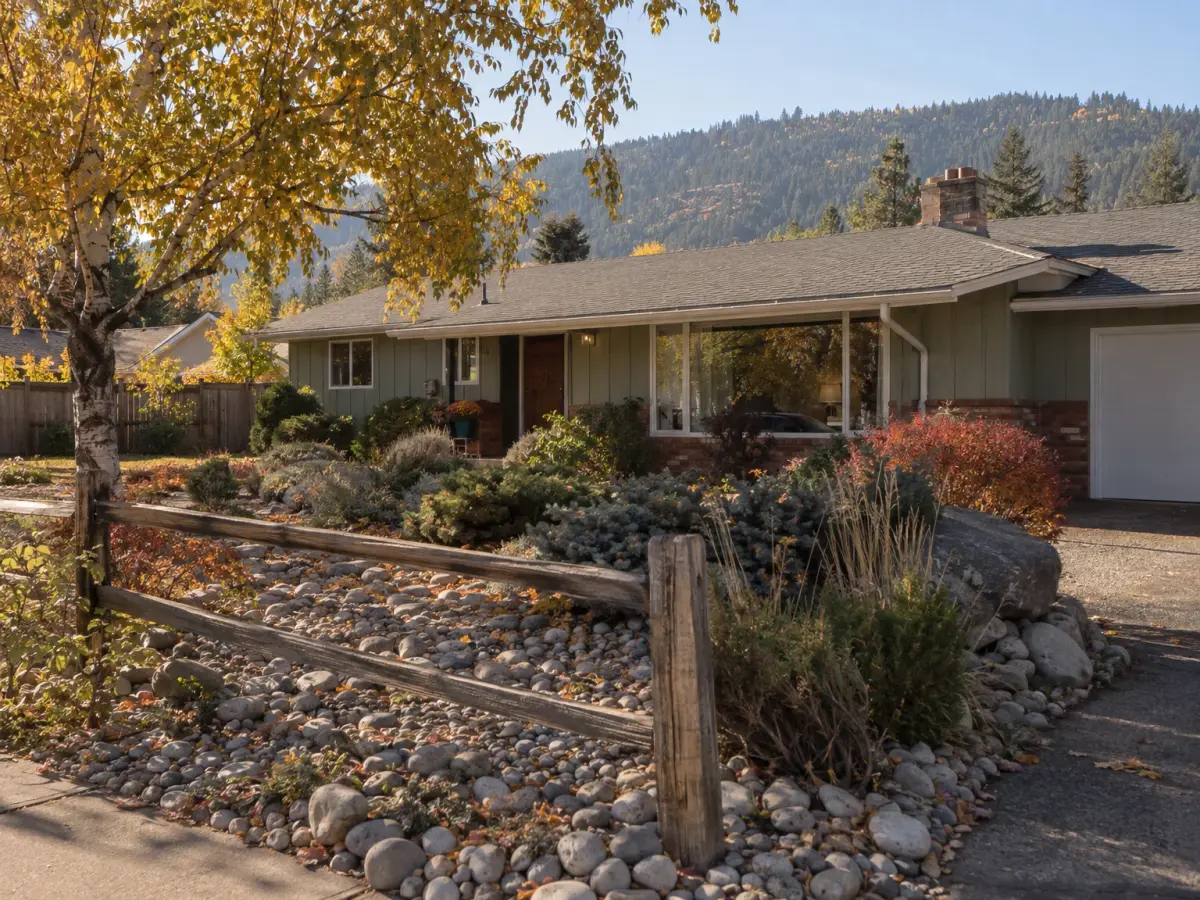
That boom still shapes the housing. The median Spokane Valley home was built in 1979, and about half are older, with the 1970s alone adding some 9,900 homes. Houses from that era were built long before radon rules and have no radon pipe, so they need a full sub-slab system with the fan outside or in the attic.
Building picked up again after 2020, at about 1,007 new homes a year through 2024, nearly three times the pace of the 2010s, and most of them apartments. Newer single-family homes built under the state's radon rules usually have a passive pipe, and adding a fan is often the whole fix. In apartment buildings, the units on the lowest floor are the ones to test.
Share of homes by year built. Source 6.
Spokane Valley questions
Is radon worse in Spokane Valley than in the rest of the county?
The Valley's flood gravel moves soil gas easily, and state data reflect it: in 19 of 23 census tracts in Valley ZIP codes, half or more of reported tests reached 4.0 pCi/L, against 47% for Spokane County as a whole. Your own home can still be lower or higher. Only a test tells you.
My neighbor tested low. Do I still need to test?
Yes. Two houses on the same gravel can differ several times over, depending on the slab, cracks, the sump and how the house draws air in winter.
Who issues the permit for a radon fan in Spokane Valley?
Washington L&I, because the city has no electrical inspection program of its own. For a house the fee is $78.80 for up to four circuits, and it is included in our price.
Does my newer Valley home already have a radon pipe?
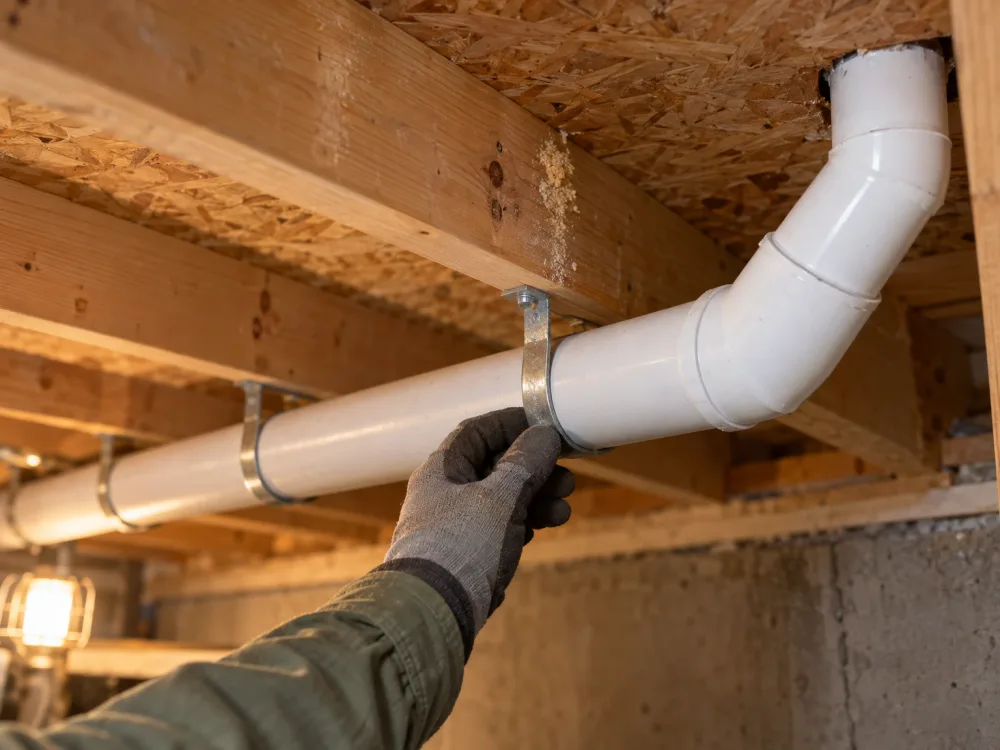
Homes built under the state's radon rules for Spokane County usually have a passive pipe running from under the slab up through the roof, often labeled in the basement or attic. A fan on that pipe turns it into an active system.
Will a radon system work on Valley gravel?
Usually very well. Suction spreads far through coarse gravel, so a single point often covers a whole slab. A quick pressure-field test before the quote confirms it.
What does the fan cost to run in Spokane Valley?
About $33 to $76 a year for a 60-watt fan, depending on whether Modern Electric, Vera, Inland Power or Avista serves your parcel.
ZIP codes: 99206 · 99212 · 99216 · 99037 · 99016
Sources for Spokane Valley (19)
- Washington Tracking Network (WA Dept. of Health): Radon test results by census tract, all years
- Washington Tracking Network (WA Dept. of Health): Radon test results by county, 1990–2020
- U.S. Geological Survey: Hydrogeologic Framework of the Spokane Valley–Rathdrum Prairie Aquifer (SIR 2007-5041)
- U.S. Geological Survey: Surficial Geology along the Spokane River, Washington (Open-File Report 02-126)
- U.S. Geological Survey: Geologic Map of the Greenacres Quadrangle (GQ-734)
- U.S. Census Bureau: American Community Survey 2020–2024, Spokane Valley city (tables B25034, B25035)
- HistoryLink.org: Spokane Valley – Thumbnail History (Essay 10119)
- City of Spokane Valley: Comprehensive Plan Housing Element Review (March 2026)
- Washington Administrative Code 51-51-60101: Appendix F, radon control methods
- Revised Code of Washington 64.06.020: Seller disclosure statement
- Washington State Department of Health: Radon
- Washington L&I: City electrical permits and inspections
- Washington L&I: Residential electrical fee worksheet, July 2026
- City of Spokane Valley: Utilities and new resident services
- Avista Utilities: Calculating your residential electric bill, Washington (effective October 1, 2026)
- Modern Electric Water Company: Rate schedule (effective April 1, 2026)
- Vera Water and Power: Policy 400, rates, charges, tariffs and fees (June 17, 2026)
- Inland Power & Light: Residential rates (effective April 1, 2026)
- U.S. EPA: What is EPA's action level for radon?
Find your number in Spokane Valley.
48-hour test from $195. Mitigation from $1,295 with the post-test included.